
Large companies setting up enterprise-level remote teams overseas have way more on the line than small businesses. And when there’s that much at stake, there’s also a lot more motivation to risk-proof the arrangement and make sure it’s set up properly from the beginning.
I know what you’re thinking — but of course they do. I’m a small business owner. I’m busy. I just need some stuff off my plate.
Well yes, but what happens when that stuff is off your plate, you finally have more time to grow the business, and the business does grow?
Then you need more remote or local team members, but the arrangement and structure you originally set up isn’t fit for that next stage.
Now you’re repeating work, rebuilding things, or maybe you’ve just shifted the stuff off your plate only to become a manager of work, expectations and constant reminders.
That wasn’t the plan either.
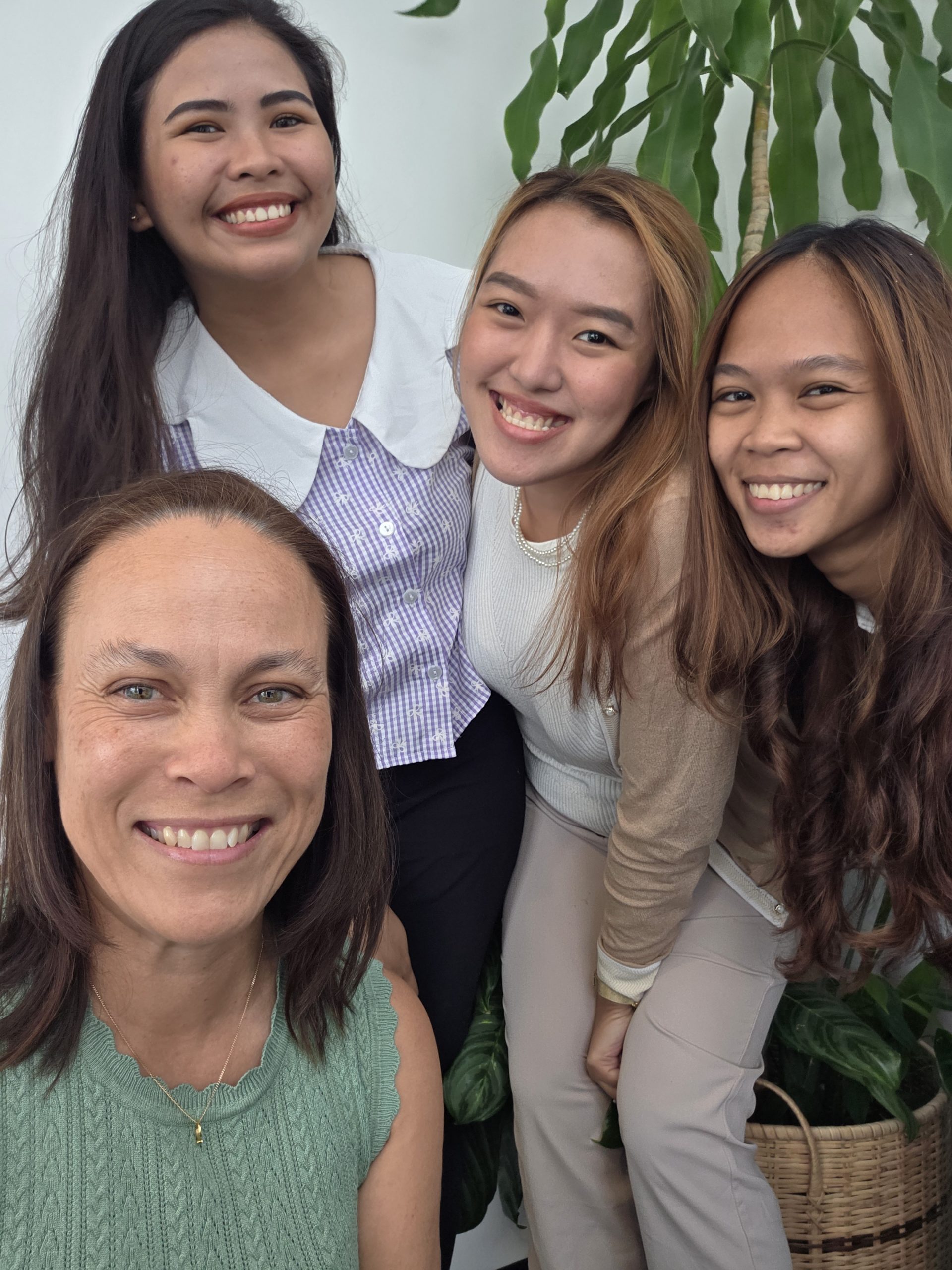
Hi, I’m Dee, founder of CQ Mills. I’ve been in the remote outsourcing industry for over 10 years and, being half Filipino myself, “I went direct with outsourcing and it didn’t work” is such a loaded comment for me. I have a lot of insight into why that happens.
After watching and being involved in outsourcing arrangements at scale, I’ve realised there is so much small businesses can learn from how larger companies approach outsourcing from the beginning.
Let’s take a look at this now.
What the Big Players Already Know About Outsourcing
Large companies have been outsourcing parts of their operations for decades, and there’s a reason they don’t approach it as simply finding the cheapest and easiest route to labour overseas and then ticking it off the list. They understand that when someone becomes part of the day-to-day running of a business, that role needs to sit within a proper operating structure.
They need to ensure roles have defined responsibilities, clear reporting lines, consistent processes and expectations that match the standards already in place across the business. It also means considering how that person’s work connects with local teams, clients, systems and wider business goals.
Of course, outsourcing can help reduce costs, but it can also create capacity, improve efficiency and give local teams more room to focus on higher-value work. It also allows the business to grow without lowering the standards customers have come to expect.
And while small businesses may not have the same resources or layers of management as larger organisations, the principle is exactly the same. You still need the right structure around the role from the beginning. In fact, when your team is smaller, one poorly managed remote role can have an even bigger impact on day-to-day operations.
The Risks You Don’t Know to Ask About Until You’ve Learnt The Hard Way
Going direct can seem like the obvious option. It looks straightforward,and if you find someone capable, it can feel like there’s no reason to complicate the arrangement.
The challenge is that you often don’t know what you don’t know.
Large companies can’t afford to get pretty much anything wrong at a large scale. An overlooked issue can end up costing hundreds of thousands of dollars, not just a couple of hundred here and there — although that adds up too. They know that bringing an expert like CQ Mills with the experience in identifying potential risks and problems before they happen is an absolute part of the process from the very beginning .
Australian small businesses are used to an operating environment where stable power, reliable internet and consistent access to systems are generally assumed. So when hiring overseas, these aren’t always the first things a business owner thinks to question. Larger companies tend to account for these operational risks from the outset. In parts of the Philippines, though, rolling brownouts and internet interruptions can be a normal part of daily life.
I’ve experienced this firsthand recently while recruiting for clients, and it’s a good example of how these differences can affect something as simple as getting the hiring process completed on time. Interviews that should have been wrapped up within a few days were pushed out because candidates were interviewing from home and their local areas were experiencing scheduled afternoon power outages.
The delays had nothing to do with professionalism or commitment. They were a reality of the local operating environment.
The same applies once someone is working in your business. As these issues start to show up around availability, communication, working conditions and workflow, they can quickly affect the day-to-day. When that happens, the work still needs to be completed, which often means it falls back onto the Australian team or the business owner.
The Infrastructure and Boundaries That Protect Both Sides
This is where the businesses that get outsourcing right start to separate themselves from the ones that struggle with it.
One of the first places that difference shows up is in the working environment. A professional office gives remote team members a reliable place to work, with backup power, stable internet and the systems they need to keep the day moving.
Of course, larger companies can afford to have people on the ground and dedicated office space to manage their outsourced teams properly. Small businesses usually don’t have access to that same level of infrastructure or oversight, and trying to build it themselves can quickly become expensive and impractical.
That gap is a big part of why I set up CQ Mills the way I did. Our remote team members work from a professional office in the Philippines with reliable internet, backup power and local management already in place. It gives smaller businesses access to the kind of infrastructure and on-the-ground oversight larger companies can build for themselves, without having to take on the cost or responsibility of creating and managing the whole operation from scratch.
There also needs to be clarity around the employment relationship. This is often one of the most underestimated parts, and when it’s not set up properly from the outset, it can cause a lot of unnecessary back and forth and misunderstandings that could have been avoided. Considerations such as,
- Who manages leave?
- How are salary reviews handled?
- What happens when a pay advance is requested?
- When a personal financial situation starts crossing into the workplace all need to be clear.
These conversations can become uncomfortable very quickly when the business owner is managing them directly.
You’re potentially going to be working with this person regularly, and naturally, a relationship does build. You can still care about your remote team member and have boundaries around what the business is responsible for. In fact, those boundaries often make the working relationship stronger because expectations are clear on both sides.
Australian and Filipino workplaces also approach communication, hierarchy, money and employment expectations differently. That’s where cultural awareness on both sides becomes so important. Having someone like myself who can bridge those differences helps navigate the grey areas early, before small misunderstandings turn into much bigger issues.
The person you hire, their skills and their experience matter just as much as the structure that holds the relationship together. It’s what creates stability for the remote team member and peace of mind for the business.
Outsourcing Should Reduce Management Pressure — Not Create More of It
At the end of the day, outsourcing should be creating more capacity in your business, not giving you another layer of management to deal with.
If your local managers are regularly stepping in to resolve employment questions, work around disruptions, navigate cultural misunderstandings or pick up work that hasn’t been completed, the pressure hasn’t really been removed. It has just shifted somewhere else.
Your Australian team shouldn’t need to become experts in how employment works in the Philippines either, just as your remote team member shouldn’t be left trying to interpret Australian workplace expectations without guidance. Both sides need to be set up in a way that allows them to focus on the roles they were actually brought into the business to do.
This is also why a difficult experience with a direct hire doesn’t necessarily mean outsourcing itself was the wrong decision. Sometimes the person was perfectly capable, but too much of the responsibility for making the arrangement work was sitting with the business owner or local manager.
The recruitment efforts are only part of the process. What happens after they start is what determines whether outsourcing genuinely gives the business more room to grow, or creates another set of responsibilities to manage.
Outsourcing can be an incredibly valuable part of your business, but getting the right person is only one piece of the puzzle. The businesses that make it work successfully long term are the ones that put the appropriate environment, expectations and management around their remote team from the beginning.
If you’re considering outsourcing, or you’ve gone direct and it’s creating more pressure than you expected, talk to CQ Mills. Let’s build your business a remote team with the structure and guidance needed to make it work properly.


